An organised shed is a useful shed. An organised shed takes 30 seconds to find what you need, keeps expensive tools in good condition, and fits far more than it appears to. A disorganised shed wastes hours of time and hides 40% of its own contents behind things you're moving to get to what you actually need. These storage solutions are practical, buildable in a weekend, and make an immediate difference to how your shed functions.
Reader Note: This article contains affiliate links. If you choose to purchase through one, we may earn a small commission at no extra cost to you. We only recommend products we genuinely stand behind. Full disclosure here.
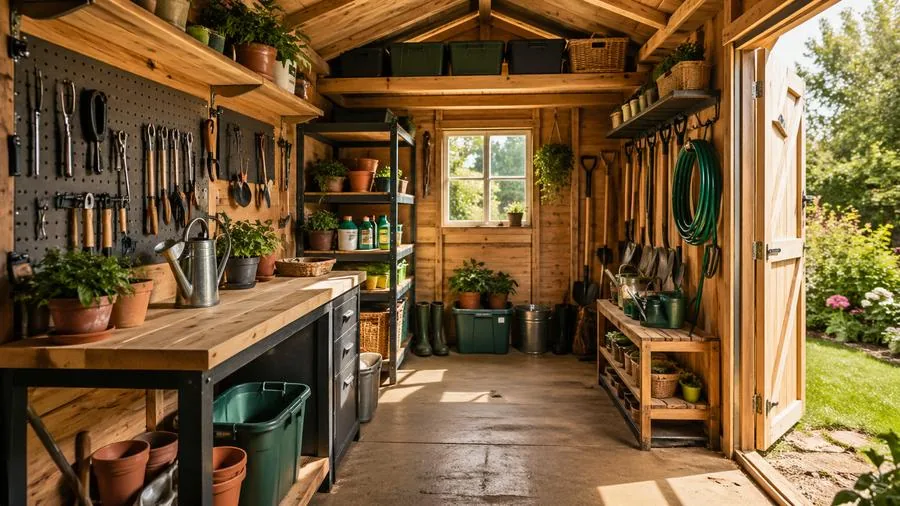
The First Rule of Shed Storage: Go Vertical
The floor is the worst place to store anything in a shed. Items on the floor are in the way, hard to see, exposed to damp, and obstruct cleaning. Use the walls instead. Even a small shed has 8,12 linear metres of wall space at or above head height that is almost always unused. This vertical space, properly fitted out, can store everything you currently have on the floor, plus considerably more.
Start with a wall inventory: stand in your shed and note what's on each wall, what's on the floor, and what would ideally be within reach of where it's used. This dictates your storage plan.
🗄️ Plans for Shed Storage Builds
Build custom shelving, loft storage, tool walls, and complete shed storage systems from proven plans, all designed to maximise real world shed storage.
Browse Storage Plans →Wall Mounted Tool Storage
Hand tools, spades, forks, rakes, hoes, are best stored hanging on the wall, handles toward you. A simple horizontal dowel rack (a length of 19mm dowel at 45° angles from a wall mounted board) holds long handled tools securely with no brackets required. Alternatively, a section of slotted pegboard (with appropriate hooks) handles hand tools, small power tools, and garden equipment in a completely reconfigurable system.
🪝 Quick Win: Use bungee cord loops screwed to the wall for storing hosepipes, extension leads, and bundles of stakes. A single $2 bungee cord replaces a dedicated storage solution and takes 5 minutes to install.
Loft Storage: The Underused Space Above You
Most sheds with a gable or gambrel roof have usable loft space above head height. A simple platform of 18mm plywood on 47×100mm joists, secured to the wall plates and any internal cross members, creates a loft floor for seasonal storage, patio cushions, camping equipment, Christmas decorations. Access via a fixed ladder (build from off cuts) or a folding loft hatch ladder.
Loft storage is ideal for bulky but lightweight items used infrequently. Don't use it for very heavy items (the wall plates can carry the load, but access is awkward) or frequently accessed tools. The effort of getting things up and down is only justified by items you retrieve a few times per year.
Shelving Systems for Garden Chemicals and Small Items
Adjustable shelving (bracket and shelf systems using timber or metal) is essential for garden chemicals, paint, small pots, and miscellaneous hardware. Fix shelves to a wall stud or use a free standing shelving unit secured to the wall to prevent toppling. Keep chemicals on lower shelves where they're stable and easily inspected. Store all liquids with their lids tightly closed and in secondary containment (a tray that would catch any spills).
Label everything. A simple label maker is one of the most cost effective shed organisation tools, it takes two minutes per shelf and eliminates the 'what is this?' problem that causes things to accumulate on every flat surface.
Bike, Wheelbarrow, and Mower Storage
Bikes hung vertically from wall hooks take a fraction of the floor space of bikes leaned against walls. A simple hook screwed into a wall stud holds a bike securely, buy hooks rated for the weight and use two per bike for stability. A wheelbarrow stored upside down or on a wall mounted bracket occupies 70% less floor space than one stored right side up. A mower on a wall mounted deck hanger (a purpose made steel bracket) gives back significant floor space in a small shed.
🚪 Layout Tip: Create a 'daily access zone', a 600mm deep strip along the main door where only items used weekly or more frequently are stored. Everything accessed rarely goes to the back or up high. This single habit eliminates the most common shed frustration: blocking the entrance with things you have to move every time you go in.
🏗️ Build Better Shed Storage
Plans for loft platforms, wall storage systems, tool racks, and complete shed fitouts, build exactly the storage your shed needs.
Get Storage Plans →