The right shed plan makes a project straightforward; the wrong one makes it frustrating. A plan that specifies the right size for your garden, the right roof for your climate, and the right features for your use will guide you through the build with confidence. A plan that's poorly matched to your situation leads to mid build redesigns, wasted material, and a finished shed that doesn't quite work. This guide helps you choose right first time.
Reader Note: This article contains affiliate links. If you choose to purchase through one, we may earn a small commission at no extra cost to you. We only recommend products we genuinely stand behind. Full disclosure here.
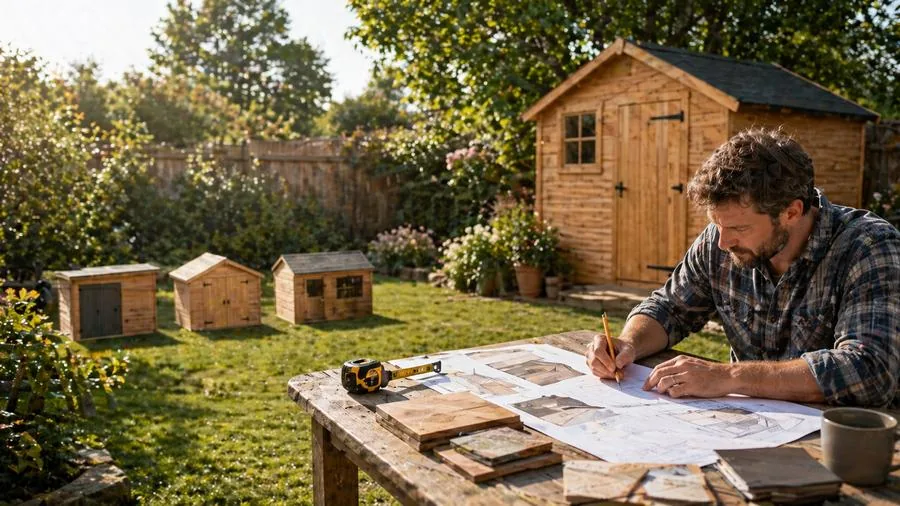
Start With Function: What Is This Shed For?
The intended use of your shed should drive every other decision. A tool and garden equipment store needs wide double doors and a clear floor plan. A workshop needs power access, good lighting (windows), and workbench space. A home office or hobby studio needs insulation, weatherproofing, heating provision, and potentially planning permission. A potting shed needs a work surface, ventilation, and easy access. Mixing functions is possible, a combined workshop and storage shed is a common and practical design, but define the primary use first.
Shed use also determines size. The most common beginner mistake is building too small. If you're building a storage shed, add 30% to your estimated size requirement, you will fill whatever space you create, and a shed that's too small is immediately frustrating. If you're building a workshop, sketch your intended workbench layout inside the footprint before committing to dimensions.
🏗️ 12,000+ Shed Plans for Every Use
Storage sheds, workshop sheds, garden offices, and combo designs, complete plans with material lists, cut sheets, and foundation options for every size and style.
Browse All Shed Plans →Choosing Your Roof Style
The four main shed roof styles each suit different situations. A pent roof (single slope) is the simplest to build and most space efficient but provides no loft storage. A gable roof (triangular ends, ridge along the centreline) is the classic shed shape, allows some loft storage, and sheds water well in all directions. A gambrel (barn style) roof maximises interior height and loft space, ideal for workshop sheds. A lean to roof works where the shed attaches to a wall or fence, sloping away from the main structure.
🌧️ Climate Tip: For UK and Irish climates, a minimum 15° roof pitch is recommended for any roofing material that isn't a single ply membrane. Below this, water can be driven back upslope by wind, causing leaks even with well installed roofing. A 20,30° pitch is more reliable.
Key Features to Look for in a Good Shed Plan
A quality shed plan should include: a complete cut list with every piece dimensioned, foundation options (not just one method), clear assembly drawings at each stage, door and window framing details, and a materials list with quantities. It should also specify lumber grades and preservative requirements, plans that just say '2×4 timber' without treatment specifications can lead to premature decay in floor framing.
Beware plans that show only a finished rendering with no construction details. Many free plans online fall into this category, they're inspiration, not instructions. A proper construction plan gives you everything needed to build without additional research or guesswork.
Size Guide: Common Shed Dimensions
6×4 (1.8×1.2m): Very small, tools and garden equipment only. 8×6 (2.4×1.8m): Standard garden storage, comfortable for one person to work inside. 10×8 (3×2.4m): Large storage or small workshop. 12×10 (3.6×3m): Comfortable workshop for one person. 16×12 (4.8×3.6m): Spacious workshop, possible to install larger tools. Measure your available garden space carefully, including required clearances from boundaries and the house, before committing to a size.
📐 Find Your Perfect Shed Plan
Browse 12,000+ professionally designed shed plans in every style and size, with full construction details, material lists, and proven designs for every skill level.
Browse Shed Plans →